2019-08-04

Matrak

   Around 1574 a German botanist and traveller called Leonhart Rauwolf met with an Ottoman pasha along with hundreds of sipahis marching toward Damascus. Later in his book Rauwolf mentioned the Ottoman cudgel fencing (known nowadays as the game of matrak).

  The excerpts are from the English translation of Rauwolf's book - entitled A Collection of Curious Travels & Voyages in two tomes, the first containing Dr. Leonhart Rauwolf's Itinerary into the eastern countries...., compiled and translated by John Ray in 1693, 111 years after the German publication. 

Excerpts from Page 110 [2]


   Modern transcription of the 1693 text: „The Sipahis which came with the Basha, took (because they would not be idle) their diversion in running, shooting with arrows, and in fencing, or cudgel-playing, and sometimes the country people came in with them, and play with them, but not in so many sorts of arms as the fencing-masters do in our country, viz. with daggers, swords or halberds, for these are not in fashion in these countries. 

   They take instead thereof only cudgels, with them they approach towards one another three times, let not with such flourishes and neatness as our fencers do before they begin, for their long cloths hinder them. In their left hand they have a buckler which is about a foot diameter round, covered with leather and stuffed out with hair; in their right hand they have a cudgel, wherewith they strike at one another in the first bout, as the boys do in our country, but in the second and third bout, they strike cross-wise, chiefly in the third which is the last, which they take off cleverly with their bucklers and sometime they strike at one others legs, but never to hurt one another; when this is done they turn back and march off. This manner of fencing is very common in these countries.” (FB)

  A fascinating first-hand account about matrak.
__________________________________________
  1. I have found the first citation of Rauwolf's visit of the Ottoman Empire on Silkfencing Team FB-page.
  2. Online version.

2019-07-31

Chinese

   Fascinating depictions of different European nations as seen or rather imagined by the Chinese around 1769. These images can be found in Huang Qing Zhigong Tu (Collection of Portraits of Subordinate Peoples of the Qing Dynasty), which is an 18th-century ethnological study of Chinese tributary states, including Western nations that traded with the Qing Empire. Naturally I have been interested in the way that various European swords (smallswords, sabres) were depicted in this very nice costume book.

    Smallswords in the pictures from Huang Qing Zhigong Tu are drawn really well. It seems that an illustrator had an opportunity to observe those swords, probably worn by Western diplomats or other officials who visited the Qing court in the second part of the 18th century.


  Unfortunately sabre hilts are depicted in a really funny way. 

Hungarian sabre

Polish sabre

  It is very obvious that the sabre hilts are depicted with many small mistakes: only with partial crossguard, with very straight grip, without a knuckle-bow [4]; the illustrator had struggled to understand the real function of the two rings on the scabbard. The Polish sabre simple tucked in the belt, while in reality those rings are used to suspend a sabre from a swordbelt.

„typical” Hungarian [3]

  Wikimedia Commons, an online repository of free-use images, contains all images of that beautifully illustrated Chinese book. Enjoy!

   It is worth noting the bombastic title of the Chinese book: subordinate peoples of the Qing Dynasty. Fortunately European nations - including Hungarians, Polish people - have not been tributaries of the Qing Empire. 
______________________________________
  1. I have found the „Hussar” page of this Chinese book here. It is a FB-post by Zsolt Tokaji, sinologist and very active wikipedian.
  2. Hungarian text of the post: „A 18. század második felében összeállított, „A felséges mandzsu dinasztia adófizetőinek albuma” (Huang qing zhi gong tu) című műben a magyarokról.” Source: Zsolt Tokaji, sinologist. Beside the depiction of Hungarians there is a Hungarian translation of the Chinese text, which describes the customs of Hungary. 
  3. The Chinese text says that Hungarians look like Mongols. 😁
  4. A very typical feature of Hungarian, Polish sabres of the 18th century. 


2019-07-24

Evolúció

   Eddig már többször írtam a barantás vívószablyáról, itt az ideje, hogy áttekintsük az eszköz fejlődését.

BSZ-1
   A barantás vívóeszközök őse. Bővebben: részletes ismertetés [1]

BSZ-2
   Úgy tudom, ezek a szablyák barantázó gyerekek és nők részére készültek, de sajnos nincs konkrét adatom róluk. Valószínűleg könnyebbek lehettek a férfiák által használt, famaggal rendelkező BSZ-1-nél. Valami hasonló vívószablyákat láthatunk későbbi fényképeken. [Vívótopik

BSZ-3
  Ilyen eszköz még soha nem volt a kezemben. Annyit tudok róla, hogy az erdélyi barantások fejlesztették ki valamikor 2013 körül. [5] Akkor láttam először képeket erről a vívószablyáról. A következő három kép a 2017-es Erdélyi Szablyavívó Bajnokságon készült összefoglalóból lett kivágva. [2]


A markolat vége


  Pontosan tanulmányozható, hogy milyen szerelvényekből lett összeállítva a szablya, a keresztvas kialakítása stb. A BSZ-1 képest határozottan jobb vívóeszköz. Per pillanat nem állnak rendelkezésünkre adatok az erdélyi változat tömegéről, súlypontjáról és egyéb paramétereiről. Látszik, a markolat felülete gyakran teljesen sima, habár csúszásmentesített markolatot is láttam képeken; nem tudni, hogy töltöttek-e valami a cső belsejébe a tömeg növelése érdekében. [6] Nem túl szerencsés megoldás a keresztvas vége: simán felszakítja a penge szalagos borítását.

BSZ-4
   A legelterjedtebb változat: részletes ismertetés. Idővel némileg pontosabb adatok is lesznek ebben a bejegyzésben. A vívószablyáról készült képek megtalálhatók a 2017-es Bors Kupáról szóló ismertetőben.

BSZ-5
  Ez a legújabb változat. [4] Jelenleg ezt használjuk az egyetemen folyó grundvívó gyakorlásokon. Kimondottan jó vívóeszköz, bár van 1-2 tervezési gond vele, de ezeket - részben - már megoldottuk. Majd erről is töltök fel képeket. A technikai paraméterek tekintetében nincs eltérés az előző modellhez képest.

   A bejegyzések, a képek alapján jól követhető az OBSZ által használt vívóeszköz fejlődése: nehezen irányítható „fabunkó” → kellemes, olcsó, elnyűhetetlen vívószablya. [3]
______________________________
  1. A képek a 2012-es Baranta Világkupán készültek a Városi Sportcsarnokban. Szép csendben leballagtam a küzdőtér mellett heverő szablyához, felvittem egyet a széksorok mögé és ott készítettem a képeket. Sajnos, mérleget nem vittem, így csak később mértem le az eszköz tömegét egy kezdetleges, ám viszonylag pontos mérleggel. 
  2. Erdélyi Szablyavívó Bajnokság (Szováta, 2017) YT-videó.
  3. Az eszköz pengéjét - emberi erővel - lehetetlen eltörni, az átalakított hárítólemezt dettó. 15-20 gyakorlás után ki kell cserélni a polifoam réteget, és mondjuk évente a textil burkolatot („zoknit” (c) by Tibor).
  4. Viszonylag részletes leírás, adatokkal, javaslatokkal.
  5. Frissítés: Már ilyen szablyákat használtak a VI. Balassi Kupán 2013-ban. Fogarassy Gyula (Zrínyi HMHSE, Bp.) övében látunk ilyen vívóeszközt. (Harcművészetek c. topik)
  6. Egy délvidéki újságcikk: „A Balassi-kupán egyetlen versenyszám szerepelt, a szabad szablyavívás, amely során a barantázó vívósisakban, polifón szivaccsal borított, ólombetétes szablyákkal, szabad stílusban vívtak a pontozóbírók előtt – magyarázta Sziráki Miklós.”

2019-07-14

Chalaupka (1875)

  It is always really exciting to find a completely new sabre fencing source which you haven't seen before and which isn't already mentioned in a big database (e.g. Schola Gladiatoria's link farm). [1]

The most interesting drawing of this book [2]

Franz Chalaupka
Leitfaden zum Unterricht im Säbel-Fechten. 
Für Truppenschulen der K.& K. Armee (1875)

The content of this German book:

I. Abteilung

II. und III.

IV. Abteilung

  Lieutenant Franz Chalaupka of the 39th Infantry Regiment was a fencing master at a cadet school in Vienna. At the moment I haven't searched for further details of his military carrier.

And finally the most important thing: link to the online version.
______________________
  1. SAGA's database has already listed this source, without providing a link to the online version of Chalaupka's fencing book.
  2. Unfortunately the only one :-((

2019-07-10

Vizy Károly

Tolna Vármegye c. lap (1907.IX.01.)

  Vizy Károly vívómester nevével viszonylag ritkán találkozik az ember. Most a Vívómúzeum FB-oldalán láttam egy 1908-as listát, ahol a párbajhelyeket sorolta fel a Rendőrségi zsebkönyv. Egy ismerős utcanév - Lónyay u. 7. - mellett vettem észre a vívómester nevét. Ezen a helyen Sztrakay Norbertnek volt a vívóterme, egészen 1905-ig. Utána Vizy oktatott itt, később pedig Halász Zsiga, majd:

1921-ben Halász Zsiga vívómester nyugdíjba vonult, megüresedett a Csillag (ma Lónyai) u. 7. szám alatti vívóterme, ekkor Gerentsér kibérelte a termet és az egyetemista vívók is ide költöztek, itt kezdte bontogatni szárnyait többek között Bay Béla is. [1] Hamarosan azonban szűk lett a korszerűtlen helyiség, nem felet meg annak a haladásnak, amelyet a fiatal BEAC vívók elértek az országos vívóéletben.” (Forrás: Vívómúzeum)
________________________________
  1. 1927-től.

2019-06-29

Magic

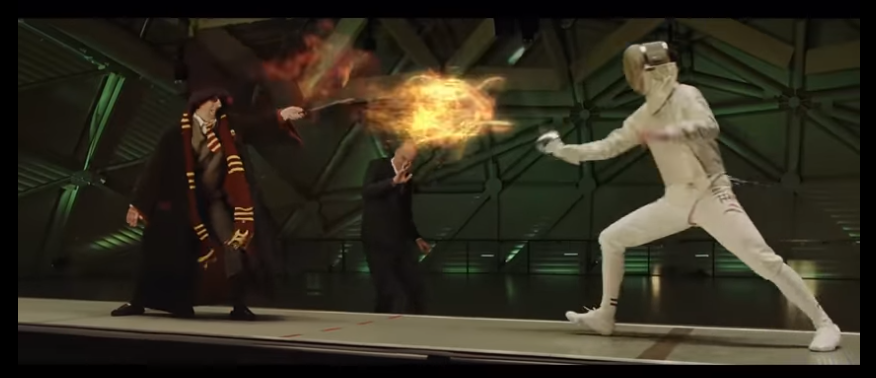
The first attack: fire ball vs Olympic sabre

Parry & an excellent riposte (0:1)

The most dangerous magical attack!

One of the last futile tricks... 0:15 :-)))

 These nice scenes are from an excellent promotional video of the FIE World Fencing Championships 2019 to be held in Budapest. [1] The full video entitled A Kind of Magic could be seen here. Also there is a short video about the creation of this promo (in Hungarian).
_______________________________________
  1. At the moment it has been viewed at least 111 thousand times.

2019-06-26

„Duel”

Please choose your weapon!

En garde!... (Etes vous) prêts?... Allez!!!

A little patching up ;-)

  A nice demonstration of a mock sabre duel at the OSC fencing hall in Budapest on June 22, 2019 was presented to the visitors. It was an interesting event of the Night of the Museums. All pictures are downloaded from the FB-page of the Fencing Museum of the OSC hall. (Vívómúzeum in Hungarian)
__________________________________
  1. Fencing master Árpád Németh was the senior duel second, who supervised the whole „duel”. As far as I could see Regenyei sabres were used during this demonstration (Strong saber with lace pattern guard, ~875 g).

2019-06-17

Atlantean

  By pure chance I came across a couple of photos of Arnold being trained by Kiyoshi Yamazaki [1]. The most interesting image is this one:

The Japanese teacher & Arnold

  I'm not a big fan of Conan the Barbarian (1982) film, but nevertheless it is interesting to know that in the 80s a Japanese instructor was employed to improve the fencing skills of the actors. Even more rewarding is to find out the specification of the Atlantean sword, which - according to the script - Conan found in a hidden cave, next to a skeleton.

Atlantean sword

   We are lucky that there are several manufacturers who produce this sword, and also many reviews are available on the net. So let's see the specification (Conan the Barbarian Atlantean Sword):
  • Overall length: .... 38 7/8"
  • Blade Length: ..... 28 1/8" from emergence from casting, 21.25" from end of langets [54 cm]
  • Grip length: ......... 5.35" [13.6 cm]
  • CoG: ..................... 4.5" from end of grip ....... [11.4 cm]
  • Weight: ................ 7 lbs 12 oz ........................ [3.171 + 0.339 = 3.5 kg]
   A short extract from the review at MyArmoury:
Handling Characteristics Well, what can I say about the Atlantean's handling qualities? At a weight of nearly eight pounds the sword is certainly no lightweight. In fact, the Atlantean's weight puts it far outside the parameters for a functional sword of this size. The sword does have a rather nice static balance, but once it is set into motion its weight becomes a hindrance. I was able to grasp the sword in a reverse grip and twirl it around in best Arnold fashion. I was able to maintain this for a few seconds before my shoulders began to feel the strain. In short, you'll need to have bigger guns than mine if you want to act like Big Arnold. I have no doubt that the Atlantean would be able to cut through any test medium of choice if it was sharpened. It just can't be done quickly or repeatedly. (Full review)
  Additional infos can be found on Wiki: „Samson and Huchthausen agreed the weapons were heavy and unbalanced, thus unsuitable for actual combat;[120][117] Lighter versions made of aluminum, fiberglass, and steel were struck in Madrid; these 3 lb (1.4 kg) copies were used in the fight scenes.[121][117] According to Schwarzenegger, the heavy swords were used in close-up shots.[122]

   From the above it is rather easy to conclude that a 3.5 kg two-handed sword is not particularly well suited for actual combat. The average weight for a historical longsword was between 1.1 and 1.8 kg (the average weight of 23 longswords in the Wallace Collection is 1.74 kg).

   So enjoy the film, if you like the whole story etc, but aware that the actual „Atlantean” sword is way too heavy and badly balanced when compared with historical European longswords.

   It is also fun to watch Skallagrim's video (How to Make Conan's Atlantean Sword Better?) A really good point from it: why is the Atlantean sword so (comparatively) short?


_____________________________
  1. Schola Gladiatoria's FB page.

2019-06-13

Bors 2019

  Ez csak egy gyorsbejegyzés a múlt vasárnapi Bors Kupáról, amit a Hejő Törzs Egyesület szervezett egy Miskolc melletti tanyán. Az edzésnaplóba már bekerültek a részletek, de kell még 1-2 nap, amíg ide is átvezetem a verseny során lejegyzett adatokat.  

A helyszín [1]

   Számos gyalogos és lovas versenyszámban lehetett indulni: fegyveres futás (3,2 km), szablyavívás;  csatakereszt dobás, íjászat, botbirkózás; lovasíjászat, -birkózás stb. Csak szablyavívásban indultam, összesen nyolc versenyző nevezett, két csoportban vívtunk (2 x 4 fő), innen 4 fő jutott tovább. Sikerült újrázni (2017-ben már megnyertem a szablyavívást).


  Hamarosan folytatom....

A hangulat [2]

Summary:
  A short post about the Bors Cup organized by a local baranta group. I have participated only in the sabre fencing part of this competition. (Baranta is basically a modern reconstruction of old Hungarian martial skills, ranging from fencing to archery, spear throwing etc.)
_______________________________________________________
  1. Az első és az utolsó kép egy YT-videóból lett kivágva (2017-es Bors Kupa).
  2. Egészen furcsa hangulata van helynek: a távolban az avasi lakótelep (XX. sz.), nem messze robog el az IC (XXI. sz.), közben pedig a Hun-tanyán lovak, jurták, hagyományőrző ruhában vágtázó lovasok (XI-??. sz.)