___________
Showing posts with label XVIII. sz.. Show all posts
2021-03-27
2019-07-31
Chinese
Fascinating depictions of different European nations as seen or rather imagined by the Chinese around 1769. These images can be found in Huang Qing Zhigong Tu (Collection of Portraits of Subordinate Peoples of the Qing Dynasty), which is an 18th-century ethnological study of Chinese tributary states, including Western nations that traded with the Qing Empire. Naturally I have been interested in the way that various European swords (smallswords, sabres) were depicted in this very nice costume book.
Smallswords in the pictures from Huang Qing Zhigong Tu are drawn really well. It seems that an illustrator had an opportunity to observe those swords, probably worn by Western diplomats or other officials who visited the Qing court in the second part of the 18th century.
Unfortunately sabre hilts are depicted in a really funny way.
Hungarian sabre
Polish sabre
It is very obvious that the sabre hilts are depicted with many small mistakes: only with partial crossguard, with very straight grip, without a knuckle-bow [4]; the illustrator had struggled to understand the real function of the two rings on the scabbard. The Polish sabre simple tucked in the belt, while in reality those rings are used to suspend a sabre from a swordbelt.
A „typical” Hungarian [3]
Wikimedia Commons, an online repository of free-use images, contains all images of that beautifully illustrated Chinese book. Enjoy!
It is worth noting the bombastic title of the Chinese book: subordinate peoples of the Qing Dynasty. Fortunately European nations - including Hungarians, Polish people - have not been tributaries of the Qing Empire.
______________________________________
- I have found the „Hussar” page of this Chinese book here. It is a FB-post by Zsolt Tokaji, sinologist and very active wikipedian.
- Hungarian text of the post: „A 18. század második felében összeállított, „A felséges mandzsu dinasztia adófizetőinek albuma” (Huang qing zhi gong tu) című műben a magyarokról.” Source: Zsolt Tokaji, sinologist. Beside the depiction of Hungarians there is a Hungarian translation of the Chinese text, which describes the customs of Hungary.
- The Chinese text says that Hungarians look like Mongols. 😁
- A very typical feature of Hungarian, Polish sabres of the 18th century.
2018-12-20
Pengék (1763)
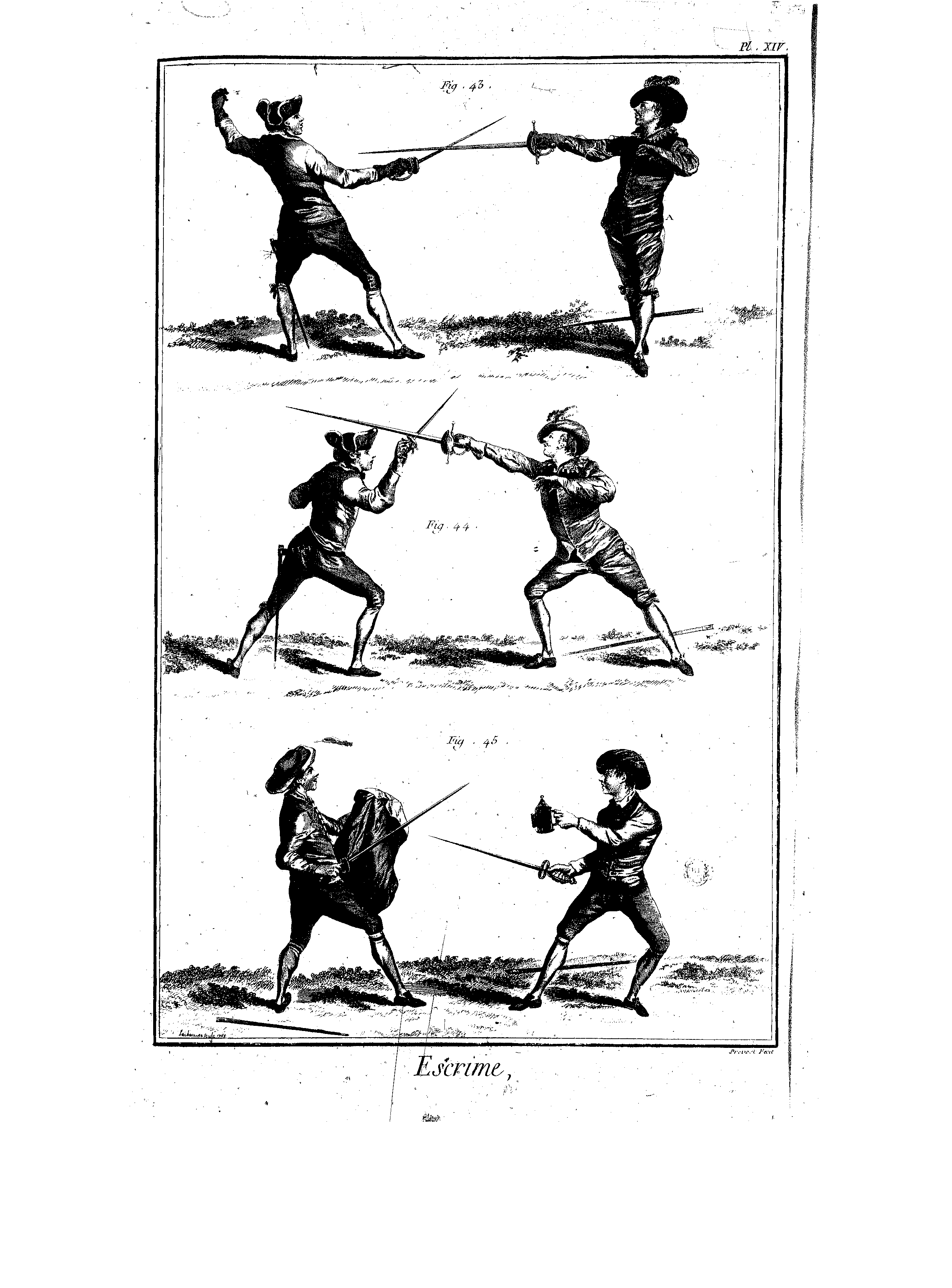
Az utóbbi időben társalgás közben többször felmerült Angelo neve. Kedves pesti vívóbarátom büszkén mutatta legújabb szerzeményét L’École des armes (1763) c. könyv reprint kiadását. A beszélgetés során még olyan ritka angol szavak értelmezésébe is elmerültünk, mint a dark lantern. [1] Közben azt is megvitattuk, hogy az egyik képen a huszár kezében egy eléggé szokatlan pengéjű szablya látható (Fig. 47).
Aztán pár napja az egyik miskolci vívópartnerem is említette a könyvet, azzal, hogy ő Velencében vette és abban az Encyclopédie képei vannak. [2] Ennyi már bőven elég volt ahhoz, hogy újra megnézzem a régről ismert képeket. És ilyen pengéket találtam!
Pengék a III. kötetből [3] [4]
Érdemes tanulmányozni az ívelt pengék fokát, ezeken is kialakítottak egy pengevájatot. A korábban említett huszár pengéje fentről a második. Az enciklopédia III. kötetében a vívás mellett a kardcsiszárok (fourbisseur fr.) munkáját ismerteti. Két vívótőr is láthatunk a képeken, ami kiegészíti a badogmaszkos képen látható vívótőrt.
__________________________________________________________
- Ez egy olyan képen szerepel, ahol lámpás van a vívó bal kezében. Fig. 45.
- A francia változatban fekete-fehér képeket láthatunk, az angolban pedig egy kiváló brit művész színes rajzait.
- Planches de l'Encyclopédie de Diderot et d'Alembert (eredeti)
- A magyarázó szövegben csak annyi adatunk van: 6. sz. tabla - 71, 72: Lame de sabre coudé. AA: le tranchant cannelé; (még folytatom)
2018-10-10
Korai fejvédek
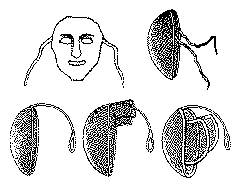
A Schola Gladiatoria egyik topikjában láttam meg a képen bemutatott, tőrvíváshoz használt fejvédét. Utána előbányásztam egy ősrégi képet, amin a vívómaszkok fejlődését mutatta be a szerző. [1] Az eredeti képen csak öt vívómaszk volt látható, ezt egészítettem ki a 6. típussal. Ennek már volt olyan része, ami a fejtetőt védi, továbbá egy külön rész a fülek védelmére.
Az arcvédelem fejlődése [2], [3]
Egy részletgazdagabb kép
a fenti fém vívómaszkról
Ezen jobban észre lehet venni a homlokrészen felső peremén található lyukat, ezzel egy további rögzítési pontot lehetett biztosítani a vívómaszknak.
____________________- Eredeti kép, http://www.fencingmaster.com/history/history_1.htm (Bac H. Tau, Maître d'Armes)
- 1765: Domenico Angelo: Escrime. Published in Volume 21 of L’Encyclopedie (1765) of Diderot and D’Alembert, Plate XV, Fig. 52. (52. ábra)
- 1782: Alexandre Picard Brémond: Traité en Raccourci sur l’Art des Armes . Turin, 1782. A könyv borítóján látható a dróthálós vívómaszk, amit két zsineggel rögzítettek a vívó fejéhez. Nem lehetett egy túl kényelmes rögzítési mód!
2018-08-19
Kitörés
Capoferro vs Nadi [1]
Érdemes alaposabban kielemezni a fenti képet. Ami talán a legszembeötlőbb, az a következő mondat: „Nadi's guard stance is much more centered, so the front foot moves much further when lunging - about 3.5 footlengths”.
Nos, ezzel több gond is lenne:
- nem 3,5 lábfejnyi, inkább csak 3,22, de ezt fogjuk rá arra, hogy a mondatban szerepel a körülbelül kitétel,
- viszont az biztosan nem jó, hogy az előrehaladás mértékét a kiindulási helyzet (A, jobb sarok) és a véghelyzet (a jobb lábfej nagyujja) között méri a szerző, sokkal helyesebb lenne az AB távolságot számítani, ez 2,27-2,3 lábfej (lf).
Máskülönben a kép kiválóan szemlélteti a XVII. sz. kitörés (Capoferro, 1610) és a modern felfogás közötti különbséget. (A modern klasszikus változatban a bal lábfej merőleges a vívóvonalhoz képest, tehát a zöld vívó bal lábát is abban a véghelyzetben kellene látnunk, mint a kék vívóét. Nadi lába valamiért más helyzetben van.)
További mérések a képen: zöld VA = 1,66 lf, kitörés hossza (k) = 3,77 lf;
kék (Capoferro) k = 4,1 lf.
Gyorsan megnéztem a Grundvívás könyvben található ábrák kitöréshosszát: az átlag valahol 4 és 4,1 lf között van. [2]
___________________________
- A kép eredeti változata.
- 41., 42. o.: 4 lf; 49. o.: 4,14 lf; 72. o.: 4,12 lf (Bay Béla kitörése); 104. o.: 4,12 lf; 133. o.: 3,93 lf; 135. o.: 3,73 lf; 142. o.: 4,14 lf.
2017-01-13
Angelo-dinasztia
A Vívás mint harcművészet topikban már többször említettük a nevét. Megérdemel egy rövid összefoglalót, amihez felhasználom Matt Easton előszavát, amit az Infantry Sword Exercise (1845) c. könyvhöz írt.
Fontos tudni, hogy 3 híresebb Angelo volt:
az alapító, .................... Domenico Angelo (1717-1802) [1]
a fia, ............................ Henry Angelo (1756-1839) [3]
és az unoka, ................ Henry Charles Angelo (1780-1852)
A nagypapa gazdag olasz kereskedő fiaként beutazta Európa, és nem meglepő módon Párizsban töltött tíz évet, ahol szorgalmasan tanult vívni a kor legjobb francia mestereitől, meg élvezte az életet. Aztán kaland kalandot követett: van benne híres angol színésznő meghódítása, elegáns vívásbemutató, a brit felső tízezer megismerése, és egy fényes londoni karrier, aminek a megkoronázása a trónörökös vívásoktatása, nem kicsi celebség [2] és egy komoly vívóiskola megalapítása. Ő adta ki a híres L’Ecole des armes c. művészi kiadványt (1763), ami csak Domenico életében további 3 kiadást ért meg.
Ami számunkra fontos: civil volt. [5]
A fia, szintén vívómester [4], 1785-ben vette át az apja vívóiskoláját. Két évvel később angolra fordította apja könyvét. Ő adta ki a szintén híres Hungarian and Highland broadsword c. könyvet, Rowlandson pazar képeivel. Nekem ő is teljesen civilnek tűnik.
Az unoka 1817-ben lett a vívóiskola vezetője, ami egészen 1897-ig maradt fenn vívóintézményként. 1812 nyarán kidolgozott egy tengerészkard (cutlass) rendszert a brit haditengerészet számára. Az Admiralitás jóváhagyásával, 1813 és 1820 között ez a rendszer volt a tengerészkard-kiképzés szabvány rendszere a flottánál. [7] Ehhez egy adalék.
"Before Henry Charles even took over the running of the Angelo school he had, in around 1812, already been involved in the creation of a naval cutlass system. Edward Anthony Angelo, Henry Charles’ brother, recorded some detail as to the birth of the Naval Cutlass Exercise:
“During the blockade of the Scheld and Dutch ports, in the summer of 1812, my brother was on a visit to his friend, Captain Rainier, of the 'Norge' frigate, and whilst on board that ship, thinking it might be beneficial, and an amusement, to the sailors, he drilled the crew in an appropriate use of their cutlasses, and it met with such approbation and practice in other ships, that it ultimately became a portion of the instruction for the Navy, on board the 'Excellent' in Portsmouth.”
This Naval Cutlass Exercise was subsequently adopted by the Admiralty as a standard exercise for naval cutlass between 1813 and 1820. It was evidently revised and simplified into a system with only three guards some time before 1830." (Matt Easton)
1833 lett a brit hadsereg kardoktatási főfelügyelője (Superintendent of Sword Exercise in the Army), egészen 1852-ig bekövetkezett haláláig. Na, őt lehet katonai "beszállítónak" nevezni. Ő írta az 1845-ös könyvet, amit sokan - köztük Burton is [6] - kritizáltak, ennek ellenére még évtizedekig kiképzőkönyvként használták.
____________________________________________
1. Persze volt neki bombasztikus olasz neve is: Angelo Domenico Malevolti Tremamondo.
2. Ha jól megnézzük, akkor látszik, hogy a keresztnevén vált ismerté.
3. Henry Charles William Angelo.
4. Nincs adat arról, hogy a nagypapának tényleges képesítése lett volna. Londonban 1754-1758 először lovaglást oktatott, és csak 1758-ban a felmerülő pénzügyi gondjai miatt kezdett bele a vívásoktatásba.
5. Egy fórumos vitához kapcsolódik: civil vs katonai vívómesterek.
6. Aki viszont képesített vívómester volt. Franciaországban szerezte a mesterlevelét.
7. Hasonló rendszer dolgozott ki 1812 körül William Pringle Green hadnagy. (További adatok az indexes vívótopikban (4886. hsz.))
2016-08-12
Gladiátorok, 1735
"Plate IX. The Faulchion or Hanger, the same with Plate I." [1]
"Plate X. The inside Faulchion, the same with Plate II."
Ilyen szablyákkal vívtak véres küzdelmeket a brit "gladiátorok" Figg korában. [2] A kép James Miller skót származású százados és vívómester 1735-ben megjelent könyvecskéjéből való. A könyv pontos címe: A treatise on backsword, sword, buckler, sword and dagger, sword and great gauntlet, falchon, quarterstaff és mindössze 15 oldalt tartalmaz: bevezető, a képek rövid leírása és különböző vívóhelyzeteket ábrázoló 14 db rézkarc (?). Az ábrákon sokféle fegyvert szerepeltet a szerző: skót egyenes kard, egész kosárral (backsword), kard és ökölpajzs, kard és kosaras hárítótőr, kard és hatalmas alkarvédő, szablya és hosszúbot. A mű bevezetőjében és egyben ajánlásában Miller százados azt írta: "...a short treatise of the gladiatory art of defence..."
A derék százados skót karddal
A képek sorrendje fel lett cserélve. "It appears that the plates in the original publication are incorrectly numbered. Each engraving contains a number in the upper left hand corner, which ought to correspond with the caption on the first page. However, some of these are incorrect. Plates 4 and 5 (St George and Hanging Guard) have been swapped over, as have plates 9 and 10 (outside and inside guard with falchion)." (LSD)
A művet Alfred Hutton is említi a saját könyvében (Cold Steel) és 1737-t adja meg a kiadás évének. 4 képét használt fel: Inside Guard, Outside Guard, Hanging Guard, St. George's Guard.
Érdekességek
A lábak közötti távolságot 12-14 hüvelykben (30,5-35,6 cm) adja meg Miller, a testmagasság függvényében, kiemelve, hogy a testsúly a bal lábon legyen. További különlegesség -
"...the back part of your left hand must be within half a span of the left side of your face".
_____________________________
1. "Plate I. Shows you the Outside-Guard, which covers the outside of your Body from Head to Toe.."
2. Nem mellékes, hogy XVIII. sz. első harmadában Miller falchionnak vagy hangernek nevezi ezeket a szablyákat. Utána kellene nézni, hogy mikor jelenik meg a sabre szó az angol nyelvben.
2016-07-28
Figg és a kardok
A homályos ökölvívás-történeti emlékeim között ott dereng James Figg kopaszra borotvált feje, vállas alakja, a mai szem számára szokatlan alapállása és ököltartása. Némi kutakodás után számos érdekes dolog derült erről a legendás pusztakezes ökölvívóról, pl. az, hogy a XVIII. sz. angol díjvívás általában 3 menetből állt - éles pengékkel történő vívásból, igen lazán értelmezett ökölvívásból (ebbe belefért a fejelés, sípcsontrúgás, dobások, földön fekvő ellenfél taposása stb.) és végül következett a botvívás (ebben a menetben hosszúbotot vagy a rövidebb cudgelt használták).
""The "boxing" practiced by Figg was a very different sport in the early 1700s then from what it is today. These were no-holds-barred contests that would usually take place over 3 bouts, one of swordplay with a choice of live swords, daggers & shields, one of bare-knuckle boxing, and one of quarterstaff or cudgels. The earliest "boxers" not only had to learn various weapon skills they also trained in a fist fighting art that included eye gouging, hair pulling, spitting, head-butting, purring (shin-kicking), stomping and kicking downed opponents, or wrestling throws and grappling whilst on the ground. The men who partook in these matches were often referred to as "prizefighters" because they would fight against all comers for prizes of money, free beer, hats or cups. And the best of these "prizefighters" was James Figg."
"A third, deciding match, between the two took place on the 6th of June 1727, in front of an audience of 3,000 spectators that included the Prime Minister of England, Sir Robert Walpole. The first round was with swords and a cut to Sutton's shoulder resulted in Figg winning that round. The second round was fist-fighting which included throws and grappling, Figg won this round by submission. The third round was with cudgels during which Figg shattered Sutton's knee to win the match and reclaim the title. Now that is a mixed martial artist!"
Vagy
"Figg was a big man with a shaven head and an imposingly muscular physique. Pierce Egan, one of the first historians of pugilism, described the fighter in his 1812 Boxiana as being ‘more indebted to strength and courage for his success in the battlefield than to the effects of genius’. At a time when prize fights often consisted of a round of sword fighting, a round of cudgels and a round of boxing, Figg was actually far more technically accomplished with weaponry than he was with his fists. Captain John Godfrey, who was taught to fight by Figg and was himself a talented swordsman, wrote of his mentor: ‘Figg was the Atlas of the sword, and may he remain the gladiating statue! In him, strength, resolution and unparalleled judgement conspired to form a matchless master.’ He heaped praise upon Figg’s use of ‘time and measure’ and described his way with a sword as ‘charming’.
According to Egan, Figg’s way with his fists was far less elegant: ‘If his methods of fighting were subject to the criticism of the present day, he would be denominated more of a slaughterer than a neat and finished pugilist.’ But early 18th century boxing wasn’t the subtle chess match of gloved fists and tight defences that characterise the modern sport. Instead it was a brutal bare-knuckle brawl in which fighters were expected to use their elbows and fingers, throw their opponents to the floor and land punches and kicks even after their opponents were down and out. This was a form of boxing in which blood and broken bones were accepted, even demanded. Godfrey, in his book A Treatise Upon the Useful Science of Defence, recommended that boxers aim their punches between the eyebrows as this causes the eyelids to swell, obstructing the sight. ‘The man thus indecently treated and artfully hoodwinked,’ he wrote, ‘is then beat about at his adversary’s discretion.’ He also advised that blows to the stomach ‘may be attended with a vomiting of blood’. Queensbury Rules this wasn’t.
Back-sword fighting was a brutal pursuit which made bare knuckle brawling look like a bit of a picnic. The back-sword was a small one-sided blade designed for slashing and cutting, far removed from the elegant movements associated with fencing. Fighters wore no protective clothing, with the result that Figg’s body was a web of scar tissue. Godfrey recounts a back-sword bout between William Gill – one of Figg’s pupils – and an Irishman named Butler. Gill was renowned for aiming at his opponents’ legs, and on this occasion he wounded the Irishman with a cut ‘more severe and deep’ than Godfrey had ever seen before. ‘His leg was laid quite open, his calf falling down to his ankle.’ Butler was stitched up but surgeons who operated on lowly brawlers weren’t up to much. The wound became infected and after a botched amputation the Irishman ‘soon expired’. In such circumstances, the fact that Figg retired with all his limbs in place was proof of his considerable skill." [1]
Azt is lehet tudni, hogy milyen eszközöket használtak a vívók.
""The "boxing" practiced by Figg was a very different sport in the early 1700s then from what it is today. These were no-holds-barred contests that would usually take place over 3 bouts, one of swordplay with a choice of live swords, daggers & shields, one of bare-knuckle boxing, and one of quarterstaff or cudgels. The earliest "boxers" not only had to learn various weapon skills they also trained in a fist fighting art that included eye gouging, hair pulling, spitting, head-butting, purring (shin-kicking), stomping and kicking downed opponents, or wrestling throws and grappling whilst on the ground. The men who partook in these matches were often referred to as "prizefighters" because they would fight against all comers for prizes of money, free beer, hats or cups. And the best of these "prizefighters" was James Figg."
"A third, deciding match, between the two took place on the 6th of June 1727, in front of an audience of 3,000 spectators that included the Prime Minister of England, Sir Robert Walpole. The first round was with swords and a cut to Sutton's shoulder resulted in Figg winning that round. The second round was fist-fighting which included throws and grappling, Figg won this round by submission. The third round was with cudgels during which Figg shattered Sutton's knee to win the match and reclaim the title. Now that is a mixed martial artist!"
Vagy
"Figg was a big man with a shaven head and an imposingly muscular physique. Pierce Egan, one of the first historians of pugilism, described the fighter in his 1812 Boxiana as being ‘more indebted to strength and courage for his success in the battlefield than to the effects of genius’. At a time when prize fights often consisted of a round of sword fighting, a round of cudgels and a round of boxing, Figg was actually far more technically accomplished with weaponry than he was with his fists. Captain John Godfrey, who was taught to fight by Figg and was himself a talented swordsman, wrote of his mentor: ‘Figg was the Atlas of the sword, and may he remain the gladiating statue! In him, strength, resolution and unparalleled judgement conspired to form a matchless master.’ He heaped praise upon Figg’s use of ‘time and measure’ and described his way with a sword as ‘charming’.
According to Egan, Figg’s way with his fists was far less elegant: ‘If his methods of fighting were subject to the criticism of the present day, he would be denominated more of a slaughterer than a neat and finished pugilist.’ But early 18th century boxing wasn’t the subtle chess match of gloved fists and tight defences that characterise the modern sport. Instead it was a brutal bare-knuckle brawl in which fighters were expected to use their elbows and fingers, throw their opponents to the floor and land punches and kicks even after their opponents were down and out. This was a form of boxing in which blood and broken bones were accepted, even demanded. Godfrey, in his book A Treatise Upon the Useful Science of Defence, recommended that boxers aim their punches between the eyebrows as this causes the eyelids to swell, obstructing the sight. ‘The man thus indecently treated and artfully hoodwinked,’ he wrote, ‘is then beat about at his adversary’s discretion.’ He also advised that blows to the stomach ‘may be attended with a vomiting of blood’. Queensbury Rules this wasn’t.
Back-sword fighting was a brutal pursuit which made bare knuckle brawling look like a bit of a picnic. The back-sword was a small one-sided blade designed for slashing and cutting, far removed from the elegant movements associated with fencing. Fighters wore no protective clothing, with the result that Figg’s body was a web of scar tissue. Godfrey recounts a back-sword bout between William Gill – one of Figg’s pupils – and an Irishman named Butler. Gill was renowned for aiming at his opponents’ legs, and on this occasion he wounded the Irishman with a cut ‘more severe and deep’ than Godfrey had ever seen before. ‘His leg was laid quite open, his calf falling down to his ankle.’ Butler was stitched up but surgeons who operated on lowly brawlers weren’t up to much. The wound became infected and after a botched amputation the Irishman ‘soon expired’. In such circumstances, the fact that Figg retired with all his limbs in place was proof of his considerable skill." [1]
Azt is lehet tudni, hogy milyen eszközöket használtak a vívók.
Sporting Magazine, 1. kötet, Rogerson & Tuxford, 1793
History of Boxing, 13. o.
Egy további érdekes kiegészítés a korrajzhoz.
Arthur Wise: The History and Art of Personal Combat (2014), 9. o. (előszó)
___________
2013-01-04
Bezerédy Imre (2.rész)
1708. december 18.
II. Rákóczi Ferenc ezertizenkét napja
Beniczky Gáspár fejedelmi titkár diáriuma 1707-1710
Nap Kiadó, 2005
Megjegyzés:
Ez a rész felkerült a magyar wikipédia Bezerédy szócikkébe.
"... méltóságos generális Esterház Dániel mezei marsalk sok <a kéziratban egy szó helye üres> allatt regimentekbéli tisztekkel és némely senatorokkal törvények folyt s halálra ítéltettenek. Tíz óra felé a fogságbúl sok szép istenes imádsági és keresztény készületi után a szekérre feltétettetvén, executióra a város piacára kivitetettek, az ahol is a generális auditor a sententiát elolvasván, és nemzetes vitézlő Kajaly Pál hadi főauditor a pálcát kötte (!) törvén, előbb Bottkának, letérdepeltetvén veres posztóra, sok száz ember concursussában a fejét a hohár elütette, annak utána penig Bezerédynek, jóllehet nem egészlen, de semmi kínlódása nem volt, hanem azonnal megholt, az kiket is a hajdúk vasakkal és billincsekkel együtt ott lévő koporsókban betévén, templomban bevitték, a criptában eltemették. A háromnak grátiája lött. E volt azon híres vitéznek, Bezerédi Imrének tragicus exitussa, az ki a maga dicsíretes édes hazája mellett való cselekedetivel Európában egész tartományokat betöltette, maga kezével kaplárokon felöl hetvenkét ellenég[es] tisztet levágott és megölt, szerencséje olly lévén, hogy hírére nézve az ellenség rettegte. Illy magyar Herculest az ellenség a hazának megirigyelvén, akit a maga fegyverével meg nem győzhetett, szénes és hamis ígéretekkel sok esztendőktűl csalatván, végre ugyan elejtette és édes nemzeti ellen való defectióra inducálta, az kit is a maga tisztei észrevévén, megfogtak, méltóságos Esterház Antal úrhoz vittek és ide a fejedelemhez küldettek. Szánja Isten esetit, s minden igaz magyart a haza árultatásátúl őrizze meg, szánja valóban az is személyét és dicső cselekedetit, aki írta, de az árultatását irtózza és abominálja."
II. Rákóczi Ferenc ezertizenkét napja
Beniczky Gáspár fejedelmi titkár diáriuma 1707-1710
Nap Kiadó, 2005
Megjegyzés:
Ez a rész felkerült a magyar wikipédia Bezerédy szócikkébe.
Subscribe to:
Posts (Atom)