Showing posts with label kendó. Show all posts

2020-10-08

R. I. P. Wazull

 Today I have learned that an old-old online opponent, Wazull passed away in May. He was just 52 years old... How sad...


 Wazull had been practicing kendo since around the early 90s and for many years was the very active member of Hungarian online community, especially on the biggest local forum called Harcművészetek (Martial Arts). He wrote at least 7588 posts in total, including 5805 posts dedicated to the different aspects of martial arts, especially Japanese swordsmanship, including kendo.

 Back in 2008-2009 we had rather heated discussions about fencing, about HEMA (Historical European Martial Arts), about the possibility to reconstruct these lost arts based on available medieval books, on the quality of fencing displayed by European HEMA-enthusiasts around that time. He was a relentless, learned, highly intelligent and skilled debater, who -- occasionally -- came across as rather sarcastic or even arrogant. Despite of this he left behind a huge amount of interesting and valuable posts! 

R. I. P.
_______________________

  1. Hungarian readers could browse through his posts at Index dot hu. (Részletes keresés mező, nicknév alapján.)
  2. At the moment I think it would be inappropriate to disclose his IRL name, his profession or details of his biography. It may change in the future.

2020-09-26

How to...

 ...modify the tip of a plastic longsword (Red Dragon, RD) in order to make it more or less compatible with kendo headgear. We have been using a pair of synthetic longswords since May. They are absolutely great for beginners to learn the basics of the German longsword tradition (KDF), and also for light sparring (basically with nothing more than leather gloves and standard 350N masks).

 After a while, together with my fencing partner we have decided that it would be a good fun to fence with local kendo guys. More than 10 years ago -- as a complete beginner -- I fenced with them: shinai vs Olympic sabre. [1] But there is one big problem: shinai -- Japanese bamboo sword -- is really stiff (static flexibility somewhere between 17 and 22 kg), compared to Red Dragon's flexibilty (3.2-3.5 kg). So substituting shinais with plastic longswords while fencing with kendo guys is basically rather straightforward idea, but you have to overcome the next obstacle: the plastic blade could easily slide between horizontal steel bars of the kendo headgear (men), with obvious serious consequences (eye damage via blunt trauma). 

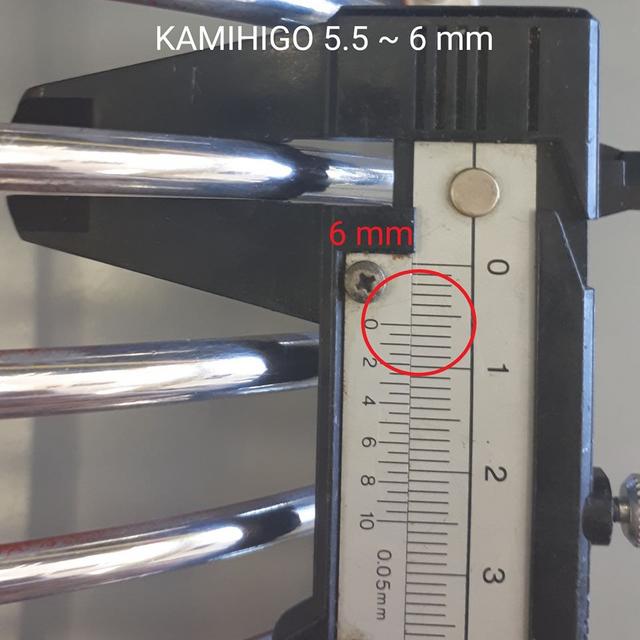
  The biggest distances between adjacent bars is 11-13 mm. [2]

Contours of RD's tip, width (23 mm),
thickness of the edge (6.5 mm)

 After taking into account all these details we thought the following modification would be sufficient to ensure relatively safe sparring with plastic longswords between a kendoka and a fencer. What we need for this? Only very basic stuff: a plastic cork [3], a piece of leather (approx. dimensions: length - 230 mm, width - 20-21 mm) and some insulation tape for securing the cork to the RD's tip.

 In this post I am using an aluminum blade (width: 30 mm) to show the process of the modification. I think that the pictures are definitely self-explanatory.


The final result

 After this modification we have a rather solid addition to RD's tip, whose dimensions -- thickness in one direction: 23 mm, in another: 31-32 mm -- might prevent the tip to enter any gap between mengane's horizontal bars. We have already tested one longsword with the modified tip against standard 350N fencing masks. It has survived two training sessions with any damage, also made thrusts with such a longsword less painful, because the modified tip is at least 3.7 times bigger than the original one. Naturally the final test will be the encounter between an empty kendo headgear and the modified longsword. 

Disclaimer:
 Everybody should be extremely cautious while fencing, especially during free sparring sessions between the representatives of different fencing schools. We are not advocating the usage of modified fencing equipment. Everybody performs such a modification, and uses the modified equipment at his / her own risks. The safest way to fence with plastic longswords is to use standard Olympic headgear for both the kendoka and the fencer. 
_____________________________________

  1. The YT-video of this encounter has reached almost 2 million views (1,981,461).
  2. Mengane.
  3. Diameter: 21 mm, height: 36 mm; it is advisable to split only the first 30-32 mm. 

2020-05-31

Kyohan (1909)

  Ten years ago a great post appeared at kenshi247 site, entitled Kenjutsu Kyohan. This post contained the English translation of an interesting Japanese source: local military sabre manual from 1909. At that time the Japanese military tried to copy European sabre systems, and established a rather interesting hybrid system: Japanese style protective equipment, shinai as fencing weapon, but many other components were definitely copied from the European sabre sources (mainly French). So I have been deeply disappointed when I saw that the translation and the whole post disappeared from kenshi247 homepage. [1] 


 Fortunately it is really hard to remove something from the net, once it was uploaded and widely available. So currently this interesting translation can be found at many places.
  1. Via Way Back Machine
  2. Via the BA's thesis (2010) of its translator (Appendix A). [3]
  3. Via another site.
 If you are interested in such a cross-cultural thing, then download the translation and save it, because who knows how long the above links will be alive. 

French (?) foil fencing & Japanese cadets [4]
____________________________________
  1. Original link. At the moment if we follow that link, only a „Page not found” message welcomes the visitor, without providing any further explanation.
  2. In November 2010 Matt Easton posted the link to this translation at Schola Gladiatoria's list of online treatises. Currently his site is under major transition from one provider to another, and therefore cannot be used. But a cached version can be seen here.
  3. Isaac Meyer: The Soul of a Nation: Swordsmanship in Japan’s Modern Period.
  4. Presumably the last decades of the 19th century.

2020-05-12

Castello

  In a recent interview, while answering a question [1], Maestro Ramon Martinez has mentioned the following encounter between a kendoka and an European fencer: „...another person using katana I don't know. I do know that in 1911 in Havana (Cuba) Maestro Julio Martinez Castello faced kendo master named Conde Cano (Kano?), I believe. And he used his saber against master's shinai, and I believe that Castello was victorious in that encounter. However Castello was so fascinated by the Japanese swordsman that he asked him to teach him it. In fact I remember that [...] he used to sell kendo equipment.” [2]

Ramon Martinez

 It might happen that Maestro Martinez just identified another person in an old photo, showing the encounter between Mitsuyo Maeda (aka Count Combat or Conde Koma in Spanish) and a European fencer. The exact location, where this picture was taken, isn't known yet, also we don't know when that encounter took place. (More about it.)

Maeda vs ??

Julio Martinez Castello in 1933 

  In a photo from the 1933 edition of his book -- The Theory and Practice of Fencing -- we see the fencing master at the age of 51. Without being too speculative, I think we can say that the following is true or highly plausible:
  • Martinez mentioned the name of Castello's opponent: Conde Kano;
  • It could be a corrupted or misremembered name of Conde Koma;
  • Castello was born in 1882. He learned to fence at the Royal Academy in Madrid and taught in Spain, Argentina and Cuba before coming to the United States in 1914;
  • Conde Koma was in Cuba between the end of 1908 and 1913;
  • The characteristic baldness of Castello (1933) and the very similar baldness of the person in the middle could indicate that indeed that European fencer is Castello, photographed in 1911. 
  Just to summarize the whole thing.

 It is rather plausible that the person who stands between Maeda and the another fencer can be Julio M. Castello. And the encounter indeed happened in 1911 in Havana, where Castello taught fencing before 1914, also we do know, that Maeda visited the Cuban capital between 1908 and 1913, during his American tour. Naturally only a good article from a Cuban newspaper of that period could resolve this uncertainty.
_______________________________________
  1. Did a duel ever happen in which one man used a katana & the other a sabre?
  2. R. Martinez answers questions about Fencing & Fencing History (2020) [24:16]
  3. The United States has been fortunate over the years to attract many notable fencing masters. One of these was Maestro Julio Martinez Castello (1882-1973), a highly successful Spanish fencing master who was born in 1882. He learned to fence at the Royal Academy in Madrid and taught in Spain, Argentina and Cuba before coming to the United States in 1914. He taught at the New York Athletic Club, Yale and Columbia and coached the U.S. Olympic Fencing Team in 1924. Castello accepted the post of fencing master at New York University in 1927 where he stayed until the late 1940s. He produced numerous champions while he was there. While retiring in 1947, he continued to teach on an unofficial basis until his eighties. Furthermore, Castello wrote two books, "Theory of Fencing" (1931) and "The Theory and Practice of Fencing" (1933). His two sons, Hugo and James, were also respected fencing masters.” (Source)

2020-03-28

Versus II.

 Egy ideje gyűjtöm a kendósok és az európai vívók közti, régi találkozókról szóló beszámolókat. A témával kapcsolatban több bejegyzés is született:  Kendó (2016), West vs East (2018), Versus (2018). Ezekből kiderül, hogy legalább két dokumentált esetről tudunk, amikor kendósok európai vívókkal szemben léptek a jelképes pástra. A legjobban ismert eset Ando és Zablocki vívása 1976-ban, amiről számos fénykép is készült. Az eddig bemutatott találkozókon kívül van még egy további kubai eset is, azonban -- per pillanat -- nem állnak rendelkezésünkre részletesebb leírások (fényképek, újságcikkek stb.), így az egész történet eléggé bizonytalan.

  Egy véletlen folytán találtam egy jól dokumentált magyar esetet is, 1911-ből!

 Lássuk a részleteket. A történet 1907-ben kezdődik, amikor két japán dzsúdós európai bemutató-körúton vett részt és Budapesten is szerepeltek. A korabeli újságok így írtak az eseményről.

Japán vivőmester Budapesten. Tobari Takisaburo japán vivómester, aki yokohamai japán hadiiskolát végezte, társával, Ottával európai körúton van s jelenleg Budapesten tartózkodik. Ez alkalommal Santelli Italo lovag vivómester, kinek termét a japánok meglátogatták, tiszteletükre folyó hó 26-ikán (szombaton) este a Semmelweiss-utczai vívótermében vivóestélyt rendez. — Az estély legérdekesebb pontja a két japán mester egymásközti küzdelme lesz, melyet sajátságos nemzeti vivóöltözetükben, hatalmas egyenes kardjukkal fognak megvívni.” [1][2]

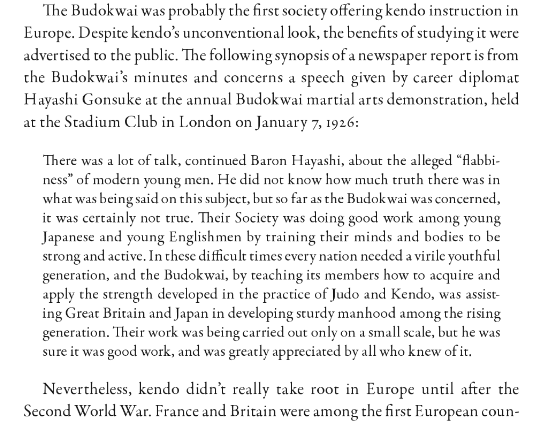
 Már önmagában ez is egy kimondottan izgalmas adatmorzsa, hiszen ez lehetett az első magyar-országi kendóbemutató! [3] Abban az időben Európában is ritkaság számba mentek a kendósok bemutatói. Angliában 1926-ban volt ilyen, erről Alex Bennett számol be kiváló könyvében. [4]

  Az 1907-es bemutató során a két japán vívó -- Tobari Takisaburo és társa -- egymással vívott kendós védőfelszelésben („sajátságos nemzeti vivóöltözetükben”) és japán vívókardokkal, melyeket a korabeli tudósító „hatalmas egyenes kard”-oknak nézte. Így utólag nehéz eldönteni, hogy a japánok pontosan milyen eszközzel vívtak, sinait vagy bokkent használtak a bemutató során. [5]

  Majdnem négy évvel később -- 1911 áprilisában -- a japán mester újra Budapestre látogatott. A Santelli-iskola vívóakadémiáján vett részt! [6] A Budapesti Hírlap így számolt be az esemény számunkra legizgalmasabb részéről: „A vivóakadémia keretében Tobari-Takisaburo japán vivómester és Santelli Italó japán vívást mutatott be. A hadidiszbe öltözött japán mester furcsa mutatványát, amint bambusz bottal védekezett Santelli kardja ellen, a közönség élénk derültséggel fogadta.” [7] 


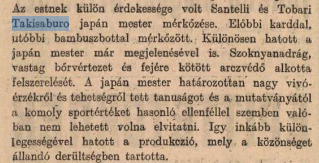
  Erről a különleges vívásról Az Ujság számolt be a legrészletesebben: „Az estnek külön érdekessége volt Santelli és Tobari Takisaburo japán mester mérkőzése. Előbbi karddal, utóbbi bambuszbottal mérkőzött. Különösen hatott a japán mester már megjelenésével is. Szoknyanadrág, vastag bőrvértezet és fejére kötött arczvédő alkotta felszerelését. A japán mester határozottan nagy vivóérzékről és tehetségről tett tanúságot és a mutatványától a komoly sportértéket hasonló ellenféllel szemben valóban nem lehetett volna elvitatni. Így inkább különlegességével hatott a produkczió, mely a közönséget állandó derültségben tartotta.” [8]
_______________________________________________
  1. A korabeli újságcikkeket az eredeti helyesírással idézem.
  2. Magyarország, 1907. október 24. Teljesen azonos szövegű cikket találunk az aznapi Az Ujság-ban.
  3. A tényleges oktatás csak 1982-ben kezdődött el.
  4. Alexander C. Bennett: Kendo: Culture of the Sword. 205. o.
  5. Tobari Takisaburo (1872-1942), külföldi oldalakon számos adatot találunk róla, ő alapvetően dzsiudzsicus volt (Tenjin Shin'yo ryu).
  6. A Santelli iskola vivó-akadémiája kedden este lesz a fővárosi Vigadó nagytermében. Santelli mester akadémiája minden évben, úgy most is, zászlója alá gyűjti a legjobb magyar vivókat és mestereket és mindig gondoskodik valami külföldi jó erőről is. --- Az akadémia programmja: Maítre d'assout: Berty László százados, Szarvassy György, Zulavszky Béla századosok, dr Nagy Béla és Szántay Jenő főhadnagy. Iskolavivás: [...] Juniorok vívása: [...] Senior és mester vivás: Barakovich László—Halász Ferenc kard, Kovács Andor—Leszik Sándor kard, Sanesi Lionello mester—Melichár Otthmár mester tőr. Lovas Gyula mester—Hollósy Jenő mester kard, Gerevich Aladár mester—Krencsey Géza kard, Tobari Takisaburo mester—Santelli Italo mester kard. --- Szünet. — Díjkiosztása a Santelli háziverseny győzteseinek. --- Dr Hoór Egon— Kovács Andor kard, Santelli Italo mester — Guglielmetti Giovanni mester tőr. Bach Benő mester — Kautny Antal mester kard, Sanesi Lionello mester — Slotzer Gáspár mester kard, Mészáros Ervin— Guglielmetti Giovanni mester kard, Krencsey Géza — Melichár Ottmár. Gerevich Aladár mester — Lovass Gyula mester kard. --- Az akadémia este fél 8 órakor kezdődik.” Pesti Hírlap, 1911. április 4.
  7. Budapesti Hírlap, 1911. április 5.
  8. Az Ujság, 1911. április 5.

2019-11-23

Shinai vs plastic II

 Back in March I reviewed a nice video about the elegant encounter between a kendoka and a practitioner of the Bolognese swordsmanship (HEMA). Three days ago I found another really pleasant example of cross-discipline fencing. This time two Canadian fencers -- kendoka Wilson Humphries and Phil Swift, practitioner of Fiore's longsword tradition -- showed us the value of meeting people of different fencing traditions.

0:51 - A decisive thrust. 

1:14 [1]

  A lot of background information is available about the participants. Phil trains at Maritime Sword School (Charlottetown, Prince Edward Island), while Wilson teaches kendo at the Rock Kendo Club (St. John's, Newfoundland and Labrador), the only kendo dojo of the island. More about this club might be found in this article

2:31 - Just missed by 1-2cm

2:32 - But not this time!

 Also there are some interesting comments below the YT-video [2]:

Wilson Humphries (Kendo) vs Phil Swift

 I have really enjoyed this video, also it has been fun to watch it in slow motion, and try to figure out the exact number of clean hits for both fencers.
________________________________________________
  1. One could argue that Phil's blade hit the kendoka with the flat.
  2. Phil: „Yes Humphries is strictly Kendo, however he is willing to experiment. Problem is we don't have anyone well versed in Kenjitsu here in Newfoundland. Being on an island it's tough to travel and visit experts.” „I felt like it was respectfully even. It wasn't a match to see who wins, it was more of a conversation of blades or technically wood and synthetic lol. We were examining each other's technique and mainly testing the watersWilson: „I was indeed slower than usual, partly because this was only our second time inter-sparring. I hesitated often as I had to concern myself with the false edge of his longsword and how maai and measure would change sometimes dramatically, we were trying to commensurate styles best we could. Though as you saw with the first solid thrust, hesitation got me a good clean thrust to the face. It was really enjoyable to go against such a different style and I learned a lot while doing so.”

2019-05-06

Comparison

  Most people assume that the content of Wikipedia articles is more or less static. That is not the case. Let's see for example Kendo article. On 26th July 2010 an editor - Kozushi - created an interesting and informative section called Comparisons with Western Fencing

Comparisons with Western Fencing
  Kendo and fencing, the two major international sword-based sports, are similar in many respects. The major similarities and differences are outlined here:

Footwork

Footwork is different as the two handed shinai demands that the body face squarely forward. Therefore, both feet point forward with the big toe of the left foot as far forward as the heel of the right and with about one foot length distance between them. In fencing the back foot angles out at 45 to 90 degrees and the forward foot is further ahead to enable balance and further reach with the lunge. The kendo footwork closely resembles that found in historical fencing manuals such as Joseph Swetnam, Giacomo di Grassi and George Silver where the body and both feet are turned squarely forward, and the heel of the right foot near the big toe of the left, as in kendo.

This is an illustration [3]

Footwork similarities include the use of shuffle stepping to move forwards and backwards and the lunge being the primary means of scoring a point. The kendo lunge is executed with different movement dynamics from the fencing lunge, since the power stems from the outward rotation of the hip and drive off the calf muscle instead of the extension of the leg; however, the speed and reach of the attack is comparable. Kendo requires a stomping step to score whereas fencing does not, and forward recovery is typical in kendo while the backwards recovery is typical in fencing. Body contact forbidden in fencing is allowed in kendo.

Guard Position

The primary guard position with the sword is very similar. The sword is held in a central position with the point extended out towards the opponent. In kendo, the tip of the sword is to the right of the opponent's tip so as to facilitate guarding against cuts to the wrist. This is called chūdan no kamae. Fencing also has the tip slightly to the right of the opponent's. In kendo, the kendoka place their hands on the shinai or bokken in the same location regardless of whether a kendoka is left-handed or right-handed. The left hand is placed at the bottom of the shinai with the right hand near the tsuba. Also, the right foot is placed ahead of the left foot.

There are alternative guard positions in kendo and Western fencing. In kendo, the two other guard positions utilized in keiko are gedan no kamae, where the tip of the shinai is pointed to the floor, and jodan no kamae, where the shinai is lifted above the head. In fencing, the tip of the blade can be pointed downward. In modern fencing with electrical scoring equipment, the fencer's en guarde position can be such that the weapon arm is drawn back such that the blade is point up in preparation to strike, an uncommon Jodan-like stance often and effectively used by eight-time US Foil champion Michael Marx.[18]

Scoring

In theory kendo scoring is quite similar to épée: first one to hit the target with sufficient force wins. However, successful kendo points must pass a style template (ki-ken-tai-itchi, outlined above) while épée points do not, excluding matters such as boundaries and sportsmanship. Kendo lacks the concept of "right of way" (that executing a counterattack is de facto a fault if the original attack succeeds in hitting) as applied in foil and sabre.

Respect/Sportsmanship

In competition, the kendoka bow to each other, step towards each other, draw their shinai and perform sonkyo, which is similar to a salute. At the end of the bout, the kendoka step back to their starting positions, perform sonkyo, get up, take steps backwards and bow to each other again. In fencing, the fencers (with their masks off) salute with their weapon to each other and salute the referee before the bout. And at the end of the bout, the fencers remove their masks, salute their opponent, salute the referee and then shake hands with their opponent. Optional is to shake hands with the referee or salute the audience.”

There was an alternative version of the Scoring subsection:

  „The major differences lie in the scoring of a point. In kendo the stroke of the shinai, the kiai and foot stomp known as fumikomi must all take place simultaneously. Following this, there are several acceptable methods to demonstrate zanshin or continuous awareness after the strike. One common method involves following the strike with three swift smaller steps past the opponent and then turning around to face him or her in a ready position. All of these must happen to score a point. In fencing only the touching of the sword to the opponent's pointable area with sufficient pressure counts for a point. No kiai, fumikomi or zanshin is needed. This makes scoring at close quarters in kendo more difficult than in fencing as the momentum necessary to create an acceptable zanshin demonstration is harder to generate then when one is further out. Therefore pushing the opponent backwards or using the opponent to push oneself backwards, or both methods, are often used to generate distance when close to one another. In fencing, physical contact, known as corps a corps is forbidden. Instead, sword strikes without major footwork movements is often used at close quarters.”

  On 7th December 2010 the whole section was still in the article. On 7th April 2011 it was severely shortened, and finally the section was completely removed on 13th April 2011 by another editor - Ekwos -, claiming that it is an original research, and therefore should be deleted from WP. [2]

  Sometime in the near future it would be interesting to review the whole text.
___________________________

  1. I have checked several treatises on Wiktenauer: George Silver, Di Grassi, Marozzo. So next time I will return with more detailed review.
  2. Technically the editor was completely right, but with the more careful approach the whole section could have been saved, because it does contain useful information for readers.
  3. It was not in the original text.

2019-03-25

Fukuro

  Originally I have just wanted to find more about a very special type of shinai, called fukuro shinai (roughly: shinai in a leather bag) And very quickly the whole thing transformed into a nice cultural journey.

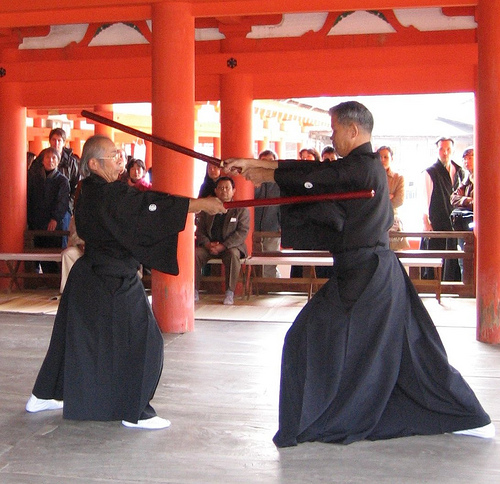
  After checking the Hungarian Wiki article on fukuro shinai [1] I found a picture of a kenjutsu demonstration in a beautiful Japanese temple. I felt I must find out more about this temple! After few additional clicks I have been browsing the pictures of stunning Itsukushima Shrine.

Eternal beauty

At low tide

Floating shrine

  But let's return to the original topic: fukuro shinai.

 The famous ''Shinkage Ryu Fukuro Shinai'' was created by Kamiizumi Isenokami, the founder of the Shinkage Ryu. Some additional pictures [2]:


Daito approximate length: 98 cm; approx. weight: 500 g.
Shoto approximate length: 61 cm; approx. weight: 310 g.

 They are made entirely of one piece of selected Bamboo, and covered with deerskin leather. Additional pictures:
And the last picture of the shrine.


_______________________________

  1. There is also a German version of this article.
  2. Pictures are from this site.

2019-03-14

Shinai vs plastic

 Originally I thought that I will name this post something like West vs East, or Versus II, or HEMA vs kendo, but those names were so obvious that I have rejected them almost immediately.

 A bamboo shinai of the kendoka (Marcello) crossed a plastic sword of the practitioner of the Bolognese swordsmanship (HEMA instructor Fabio Serraglio). The fencing match was hosted by Enrico Campobello in his Sala d’arme Il Carmagnola. You can watch the video of this bout at YT, narrated by Federico Malagutti.


 I have found this video very enjoyable for several reasons. Firstly due to the quality of fencing. Some very cool actions can be seen during this bout. For example: an incredible inquartata

Absolutely the coolest action!

A very nice disarming & cut [1]

  Just to show that I could appreciate cool actions on both sides. A nice one-handed thrust by the kendoka. The tip of the shinai hits Fabio at the moment when his attack is still in progress.


 Secondly it is really good to see that a well trained HEMA swordsman could fence elegantly an equally well prepared kendoka. 10 years ago at the biggest Hungarian martial arts forum a senior kendora simply derided HEMA fencers, their equipment (weighted shinais with a crossguard), and generally their level of swordsmanship. Good to see that the situation has changed forever!

 My sincere congratulations to both fencers, to the organisers of the event, and to the narrator, Federico Malagutti.
___________________________________________

  1. Fabio has the right hand of the kendoka completely under his control, securely jamming the hilt of the shinai against his torso with his left hand, while delivering the finishing cut to the head.

2018-08-07

Versus

Ando vs Zablocki (1976) [1]

  A West vs East téma folytatása: sikerült találni egy új fényképet, amely az 1976-as vívás során készült. Erről a találkozóról korábban már írtam egy viszonylag részletes bejegyzést.

  A korábbi fényképekhez képest jól látszik a japán kendós neve (Ando), aki most már európai fejvédet visel, a lengyel kardvívó pedig kendós mellvédőt (do). Így valószínű, hogy a szabadvívásuk egy pillanatát rögzítette a fényképész. A lengyel szöveg szerint a mérkőzés során egy döntetlent vívtak. [3] Zablocki egy XIX. századi, szélesebb pengéjű (20 mm-es) vívókardot használt a szabadvívás során.

  Kár, hogy erről a rendkívül izgalmas találkozóról nem készült filmfelvétel, vagy ha készült, akkor a mai napig nem vált közkincsé.
_________________________________

  1. A kép eredetije egy lengyel kendó klub FB-oldalán található (Sopocki Klub Kendo). És a Lengyel Kendó Szövetség archivumából származik.
  2. Lengyel szöveg: „HISTORIA KENDO W POLSCE: Ando Kozo vs Wojciech Zabłocki W maju 1976 r., na zaproszenie Ambasady Japonii, gościła w Polsce grupa przedstawicieli Wszechjapońskiej Federacji Kendo w celu wizytacji i wspólnego treningu z polskimi kenshi. Na keiko zaproszono także słynnego polskiego szermierza, Wojciecha Zabłockiego - medalistę olimpijskiego z Melbourne, Rzymu oraz Tokio. Zgodnie z relacjami świadków pojedynek zakończył się remisem. Oto jak, wiele lat później, Wojciech Zabłocki opisuje swoje doświadczenia z japońską szermierką: "Zostałem zaproszony na wspólne treningi w celu analizy zasadniczych akcji zaczepno-obronnych bambusowym mieczem shinai. Oprócz ćwiczeń prowadziłem walki z najlepszym japońskim zawodnikiem, Ando, przy czym oprócz starć „miecz na miecz”, udało mi się doprowadzić do walki „japoński miecz kontra europejska szabla” (wybrałem szablę szermierczą z końca XIX wieku, cięższą, o głowni szerokości 20 mm, lekko zakrzywionej). Sztuka władania mieczem bambusowym shinai jest podobna do szermierki prawdziwym japońskim oburęcznym mieczem. Szybkość i skuteczność cięcia polega na zastosowaniu dźwigni obu rąk i natarciu, przypominającym nieco rzut szermierczy. Zasłony polegają głównie na odbiciach. W latach 90. przeprowadziłem wspólne treningi i pokaz starcia szabli husarskiej z mieczem japońskim, którym walczył prof. dr Wojciech Cynarski (6 dan iaido). Stosunkowo najłatwiej było trafić „Japończyka” w rękę, natomiast należało bardzo uważać na jego ponowienia natarcia na brzuch – po sparowaniu cięcia na głowę (men) nie należało dawać od razu odpowiedzi, ale parować ponowienie i dopiero wtedy odpowiadać."- cytat pochodzi z książki Wojciecha Zabłockiego „Szable Świata” wydawnictwa Bellona, do której lektury zapraszamy. Książka jest dostępna za pośrednictwem sprzedaży wysyłkowej na stronie internetowej wydawnictwa www.ksiegarnia.bellona.pl. Fotografia: arch. Polskiego Związku  Kendo. Jan 21, 2014” (FB)
  3. Google fordítás: In May 1976, at the invitation of the Japanese Embassy, ​​a group of representatives of the All-Japanese Kendo Federation visited Poland and trained together with the Polish kenshi. Keiko was also invited to the famous Polish swordsman, Wojciech Zabłocki - Olympic medalist from Melbourne, Rome and Tokyo. According to the accounts of the witnesses, the duel ended in a draw. Here's how, many years later, Wojciech Zabłocki describes his experiences with Japanese fencing: "I was invited for joint training in order to analyze the basic offensive and defensive actions with the bamboo shinai sword. sword for sword, "I managed to fight" Japanese sword versus European saber "(I chose a fencing sword from the late nineteenth century, heavier, with a 20 mm wide, slightly curved blade.) The art of wielding a shinai bamboo sword is similar to real Japanese fencing The speed and efficiency of the cut consists in using the lever of both hands and attacking, reminiscent of a fencing throw .The curtains rely mainly on reflections In the 90s I conducted joint training and demonstration of the clash of the hussar saber with the Japanese sword, which was fought by Professor Wojciech Cynarski (6 dan iaido). It was relatively the easiest to hit the "Japanese" in hand, but it was necessary to be very careful about his repeated attacks on the stomach - after pairing the cut on the head (men) it was not necessary to answer immediately, but to retry and then respond. "- the quote comes from the book Wojciech Zabłocki "Szable Świata" by Bellona publishing house, which we invite you to read.”

2018-06-18

West vs East


 A képen Mitsuo Maeda (1878-1941) japán harcművész - dzsúdós stb. - látható. Per pillanat nem lehet tudni, hogy pontosan mikor és hol készült a kép, illetve a többi szereplő személyazonossága sem ismert. Valamikor az 1910-es években fényképezhették a jelenetet, és egy 1997-ben kiadott japán könyvben publikálták a képet. 

 Erről a félvételről már társalogtunk 2012-ben a Schola Gladiatoria egyik topikjában. Mostanában újra nézegettem a fényképet és észrevettem, hogy Maeda egy igen jellegzetes olasz fejvédet visel (secondo mod. Parise, ami először Parise 1884-es könyvében került bemutatásra).

  Egy másik könyvben sikerült találnom egy olyan változatot, ahol egy rövid japán szöveg is kíséri a fenti fényképet. [1]


  Kíváncsi leszek, hogy némi segítséggel sikerül-e lefordítani és értelmezni a szöveget.
________________________________
  1. A könyv pontos adatait azért nem adom meg, hogy ne befolyásolja a fordítást végzőket. (Most már megadhatóm.)
  2. A japán szöveg „megfejtése”: az első hat katakana jel felismerése, átmásolása nem okozott különösebb gondot. フエンツンク゛és a Google fordítója már adta is a választ: fencing (vívás) Maeda wikis szócikke alapján ismertem a neve kandzsis változatát, így ez sem okozott nagyobb problémát. (Az utolsó két jel.) Aztán itt kezdődtek a gondok: fel kellett ismerni a kandzsi jeleket! Ebben segített a find kanji by radical honlap. Az első siker a 左 jel volt, fordítása bal. Tehát a kép bal oldalán Maeda látható, ami nem egy hű, de nagy felfedezés, viszont egy eredeti japán felirat is igazolja, hogy a képen tényleg ő szerepel. A következő jel a 道 volt, szerintem ezt minden hm-es simán felismeri: . Megkínlódtam a 剣 jellel, sehogy sem sikerült kikeresni a listáról. Aztán megnéztem a bokken szócikket, és bingó: kard! Együtt: kendó vagy kardforgatás. Ezen a ponton végleg elakadtam, az istennek sem sikerült megfejteni a homályosan látszó 対 jel alapvonását, ami után ki lehetett volna keresni a kandzsi listáról. Némi pihenés után jött az isteni szikra: van egy európai vívás szavunk, mellette pedig a japán ellenpárja, mi van, ha a kettő között ott lappang a versus szó kandzsi jele? És bingó: a 対 tényleg az! 
  3. A második képen látható japán szöveg: フエンツンク゛_対_ 剣道 _左_前田. (Csak az olvashatóság miatt raktam be pár szóközt.) Hevenyészett fordítása: (európai) vívás japán vívással (kendóval) szemben, bal oldalt Maeda. Netalán: európai vívás japán vívás ellen... 
  4. Sajnos - jelen tudásom alapján - nem igazolható egy 2007-es angol könyv fordítása. Abban a 200. oldalon szerepel a fenti fénykép, meg az elemzett japán szöveg, és mellett a következő angol szöveg: „Maeda (Left) challenges fencer with wooden sword”. Nem tudjuk, hogy pontosan ki hívta ki a másikat, illetve hogy Maeda kezében tényleg fakard lenne.
  5. Bunasawa, Nori; Murray, John: Mitsuyo Maeda: The Toughest Man Who Ever Lived (2nd ed.). Judo Journal, 2007. 

2016-12-03

Kendó

"Neked az a rogeszmed, hogy kendosokat akarsz mas stilusokkal vivatni. Ez olyasmi, mint amikor a kisgyereknek van ket muanyagkatonaja, es elbabozgat veluk, hol az egyik gyoz, hol a masik. Tul sok ertelme nincs, hidd el nekem." (Wazull, 2009) [1]

Ezzel szemben több példát talalunk arra, hogy európai vívók és japán kendósok kipróbálták milyen érzés egy teljesen más stílust művelő emberrel szemben vívni. Két konkrét, jól dokumentált esetről szeretnék beszámolni.

Ebben a bejegyzésben Wojciech Zabłocki, lengyel kardvívó bajnok és Ando Kozo, 7 danos kendóka közötti találkozóról lesz szó. Az esetről több helyen lehet olvasni, pl. a kendo-forumon is. Lássunk egy lengyel könyvet [2], amiben viszonylag részletesen említik a vívás körülményeit.

Obok sportowych dokonan szermierczych, ktore sam opisal w kilku ksiazkach [Zablocki 1962, 1965, 1982], przedstawil zdjecia i informacje o kendo i iaido [Zablocki 1965, s. 230-232] - bodajze pierwsze w Polsce. Pisal o psychologii realnego szermierczego starcia, okreslanego przez japonskich rycerzy jako munen mushin [Zablocki 1982, s. 145]. Dla teorii sztuk i sportow walki interesujace sa doswiadczenia przeprowadzonych przez Zablockiego pojedynkow szemierczych. Pierwsza potyczkez japonskim kendoka Kozo Ando 7 dan (obecnie 8 dan) stoczyl w roku 1975 [Nowakowski 1998][7], uzywajac najpierw broni sportowej, a nastepnie oryginalnej szabli. Nastepna walke z uzyciem prawdziwej, ostrej broni, rozegral dwukrotnie przeciw reprezentattowi szkoly tenshin shoden katori shinto-ryu kenjutsu w Warszawie, w listopadzie 1992r. Wspomina ja nastepujaco: „Z Wojciechem Cynarskim potykalem sie kilka lat temu, walczac na pokazach z okazji dni japonskiej kultury. Walki te byly jedyne w swoim rodzaju: ja uzywalem szabli husarskiej, przeciwnik walczyl japonskim mieczem. Te pozornie dziwaczne spotkania (...) pokazaly, w jaki sposob elementy kulturowe - bo za takie uwazane sa techniki miecza w Japonii - moga sie przenikac i uzupelniac, mimo zupelnie innych tradycji i zalozen” [Zablocki w: Cynarski 2000 a, s. 162; por.: Cynarski 1993].

7. Sam Wojciech Zablocki podaje date: maj 1976 [Zablocki 1989, s.36]."

A lengyel idézetből kiderül, hogy Zabłockit már régebben is érdekelte a japán vívás, erről több könyvében is írt. A találkozóra 1976 májusában került sor, előbb sporteszközökkel vívtak, utána eredeti szablyával folyt a vívás. Később - 1992-ben - egy kenjutsu gyakorlóval is vívott a lengyel bajnok, ekkor huszárszablyát és japán katanát használtak a mérkőző felek. Andoról annyit érdemes tudni, hogy 1940-ben született, 27 éves korában már 7 danos kendós [3]. Zabłocki 10 évvel idősebb, mint a japán ellenfele, és többszörös olimpiai ezüst- és bronzérmes kardvívásban (csapatban 1956, 1960, 1964). Azt nem tudni, hogy mennyire volt  csúcsformában a vívás időpontjában. 

Néhány kép egy ilyen találkozóról [4]:

Akár egy akció fázisai is lehetnek - kezdés, fejvágás hárítása (sinai vágórésze a sportkard erősén), kerülés és visszavágás indulása.
_____________________________________________

1. Megtalálható az indexes fórum Harcművészetek topikjában.

2. IDO Ruch dla Kultury 2002, 253-254. o.

3. Nekem valahogy nem jön ki, hogy 27 éves már meglenne 7 dan, és 13 évesen kezdett kendózni.

4. Nagy valószínűséggel ezek a Zabłocki-Ando vívást megörökítő képek. Stimmel a ruházat (70-es évek), kendós vs olimpiai kardvívó, a vívó felszerelése sem túl modern stb.  A képek nem voltak egyértelműen beazonosítva.